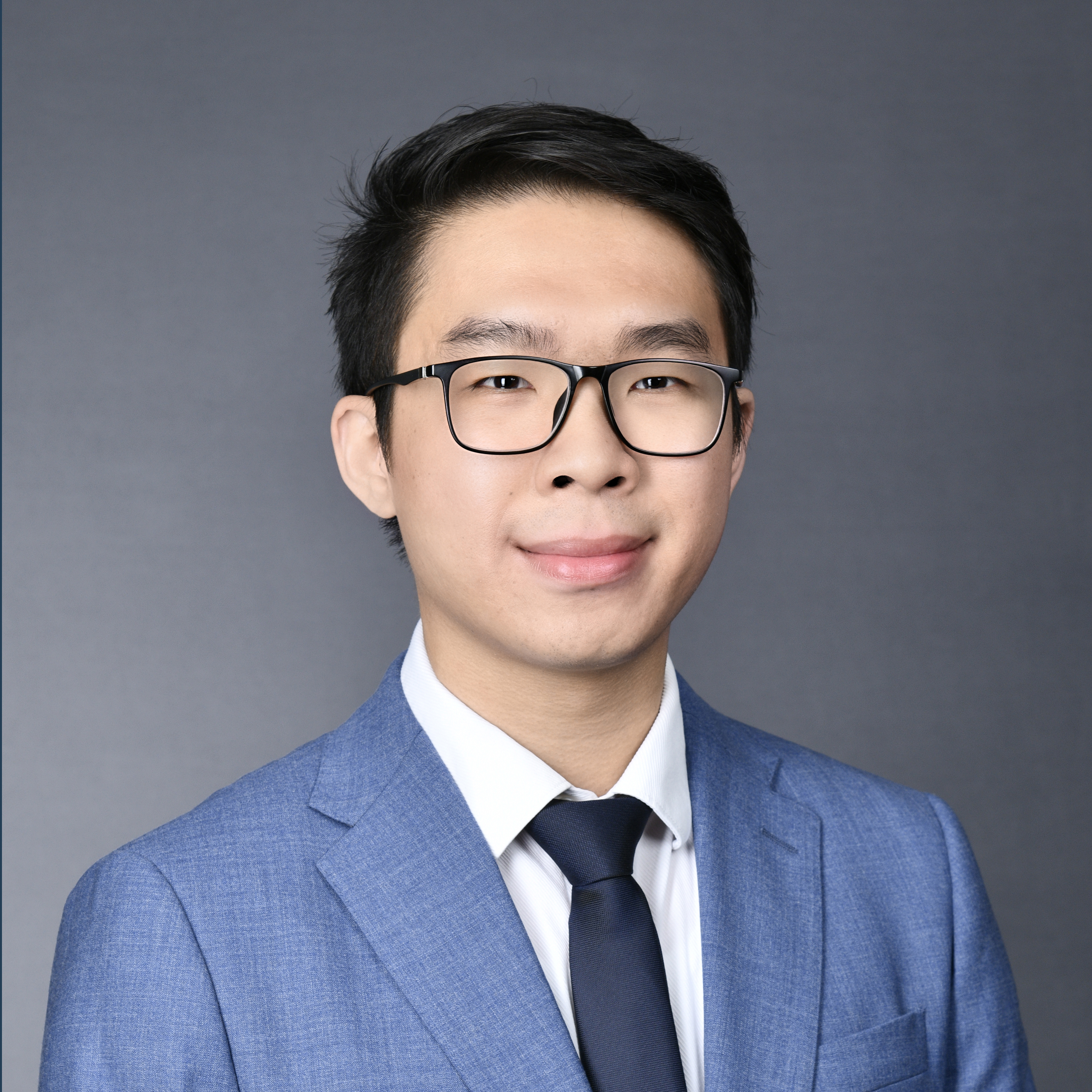
I am a Postdoctoral Researcher at the University of Mannheim, Department of Economics, and an affiliated member of the Macro Inequality Lab. My research focuses on macroeconomics, household finance, and household heterogeneity. My position is funded by the Volkswagen Foundation as part of the project Perspectives on Wealth (PIs: Moritz Kuhn and Mark L.J. Wright).
Research
Working Papers
with
Diego Cid and Pablo Sánchez
Latest draft: September 2026
Abstract
Housing is the largest asset most households hold, and it shapes both their quality of life and their accumulation of wealth. Acquiring or upgrading it typically requires financing, and access to that financing is often limited by institutions rather than by income or wealth alone. This paper asks how limited mortgage-credit access, tied to a large informal labor market without verified income, shapes household housing outcomes. We study this question in Mexico, where the principal mortgage-credit institutions extend financing only to workers registered in the formal social-security system, while roughly half the workforce remains informally employed. In the lowest income decile, the imputed rental value of a formal worker’s home is roughly 60% higher than an informal worker’s in the same decile, and only about 10% of informal workers in that decile have ever used a housing loan, compared with 55% of formal workers. We then quantitatively assess how limited credit access shapes both the distribution and the aggregate level of housing demand. We build a structural life-cycle model that separately identifies the income process and credit access of formal and informal workers, and use it to show that extending credit access universally raises the mid-quality housing share from 26.8% to 29.9%. By expanding who can convert income into housing, formal credit access raises not only housing quality but the quality of life and wealth these households can accumulate through it.
Latest draft: December 2024 · Large revision coming!
Abstract
This paper investigates how differences in subjective beliefs about stock returns contribute to wealth inequality through portfolio choice. Using the Michigan Survey of Consumers, I find that households’ beliefs about future stock returns are more pessimistic than historical averages and more widely dispersed than those of professional investors. Optimistic households are more likely to participate in the stock market and invest more heavily in equities. Motivated by these findings, I develop and calibrate a heterogeneous-agent model that incorporates the empirical distribution of beliefs. The model replicates two key patterns in household finance. First, it generates substantial non-participation in the stock market, even without participation costs, due to the prevalence of pessimistic beliefs. Second, it produces a positive correlation between wealth and portfolio returns, as optimistic households invest more in equity and accumulate wealth faster. Compared to a model without heterogeneous beliefs, my model generates an additional 0.12 in the Gini coefficient of wealth inequality and 33 percent more wealth owned by the top 10% of the households. These findings underscore the role of belief heterogeneity as a driver of household financial decisions and wealth inequality in the US.
Heterogeneous Information Friction and Shock Transmission
Latest draft: February 2024 · Preliminary, New version coming soon
Abstract
Macroeconomic expectations are known to correlate with socioeconomic status, but this relationship is absent in most heterogeneous-agent models. I find that, specifically, households with low marginal propensities to consume (MPC) or high elasticity of intertemporal substitution (EIS) update their forecasts faster than others in response to the business cycle. I develop and estimate a heterogeneous-agent model with rational expectations that captures the empirical correlation between beliefs and household characteristics. Compared to a typical calibration that assumes no such correlation, I find that this model implies more amplification and consumption heterogeneity in response to shocks.
Work in Progress
Perception of Fairness and Wealth
with
Moritz Kuhn and Mark L. J. Wright
Draft coming soon
The Making of Doubt: Endogenous Knightian Uncertainty after Large Shocks
with
Fabio Stohler and Prachi Srivastava
Teaching
Lecturer, University of Mannheim
- E5124 Household Finance and Macroeconomics (master)
Syllabus
Spring 2026
- Topics in Household Finance and Macroeconomics (Blockseminar)
Fall 2026
Teaching Assistant, Northwestern University
- Natural Resource Economics
Spring 2025
- Intermediate Macroeconomics
Spring 2023, Fall 2023, Winter 2024
- Introduction to Microeconomics
Winter 2021, Spring 2021
- Intermediate Microeconomics I
Fall 2020
Teaching evaluations (PDF), Northwestern University